-
China Local
- Eighteen Songs
- Qingming
- Hou Wu Walkabout
- Eight-sided Hall of the Huangshan Chen family
- Headquarters of the Taiping Assistant King
- Lingxia Tang Village
- Old City of Wuyi
- Seven Pillar Hall
- Shantouxia Village
- Shanxia Bao Village
- Siping Village
- Upper Tang Village
- Yanfu Monastery
- Yao Village
- Zhuge Village
- Bailu Walkabout
- Fangyan Walkabout
- Dayuan Walkabout
- Tangxi Walkabout
- Yuyuan Walkabout
- Wenlou Walkabout
- Browse Items
- Browse Exhibits
- About
- Browse Catalogue
- Documentation
- Local History in Jinhua
- Zhiyan Village
- Lu Family
- Guodong Village
- Tianning Monastery in Jinhua
- Jinhua Prefectural City God
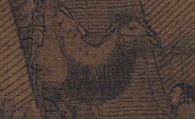
Annotation: "While skimming through the Qingming scroll, I was surprised to note a convoy of camels being led through the city,..."
Created by: Mackenzie Fox
| Title: |
Annotation: "While skimming through the Qingming scroll, I was surprised to note a convoy of camels being led through the city,..." |
|---|
| On Canvas: |
d06f37b7-34cb-48a8-b653-943f21268ed2 |
|---|---|
| Text: |
While skimming through the Qingming scroll, I was surprised to note a convoy of camels being led through the city, animals typically associated with the desert and, in the context of China, with the northwest/Silk Road. Although the Silk Road/overland transportation from the west is most often thought to have lost importance after the Tang (as far as I know, anyway) and to have terminated significantly farther west than Kaifeng/Bianjing, evidently at least some traders that relied on camels as their beasts of burden did travel with them quite a bit farther east during the Song. Why this was so is harder to speculate about; a quick glance at Valerie Hansen’s book on the Silk Road provides little help as it doesn’t address the Song Dynasty. Edward Schafer published an article on Camels in China with coverage until the Yuan, but unfortunately this is only available in physical copies and I didn’t start preparing this assignment far enough in advance to be able to call in a copy. The fact that there are so few camels, however, may provide support for the idea that overland trade from the west to Bianjing was fairly infrequent. Depending on when in the history of the Song the image is supposed to depict, it also seems unlikely that the tribute missions from the west of yore were of similar frequency/scale as they had once been given the Song’s concession of peer status to the Tangut’s, Liao, and eventually the Jurchens (though this is certainly after the time depicted by this painting). Nonetheless, given the decline of the grand Canal’s old connection to Changan, perhaps this simply became a point where land-based trade intersected with riverine transit, making it an ideal place to transfer goods for transport throughout much of the rest of the empire. What, exactly, was being transported is another question that is difficult to guess at based solely off the the image and the secondary sources ready at hand. No doubt the goods sought in China by those coming from the west and those in China from these westerners changed over time. Wilkinson offers the following, but is unspecific about when certain goods were being transported/stopped being transported: “The movement of goods was an integral part of the Central Asian economies. Silk was transported over these routes from China to the West since ancient times, but many other luxuries, such as jade, jewels, myrhh and other medicinal ingredients, tea and porcelain, Baltic amber, Siberian furs, animals, flora, fauna, magicians, techniques, ideas, religions (Buddhism, Zoroastrianism, Manichaeism, and Islam), and probably also diseases were exchanged along them. They were in use before historic times, as attested by copious excavations of Paleolithic and Neolithic artifacts.“ (44.3.1 in 5th (Pleco) edition) Wilkinson does seem to imply, though, that these overland routes were used substantially until at least the Ming; by the Song he suggests that “Turkic and Muslim traders” were those directly involved in the trade by Song, though it’s difficult to tell what the ethnic background of those leading the camels in the painting is: “Between the second century BCE to early tenth century CE the trade was mainly in the hands of Sogdian merchants (who were originally from Samarkand and spoke a form of Middle Iranian). Sogdian tombs dating from the Northern Zhou dynasty (557–581 CE) containing sarcophagi have been found near Xi’an (Cheng Yue 1996; Rong Xinjiang 2000, 2004; Wertmann 2015). They were succeeded by Türkic and Muslim traders from the Song to Qing. The overland routes through the Xiyu 西域 began to decline in the late Ming due to the fighting in the region, the effects of the long-term desertification of the oases there, and the opening of the sea route between Europe and South China, which provided (as it still does) a cheaper alternative (it takes 1,000 camels to carry 150 tonnes, one-eighth of the cargo carried by the fastest merchant sailing ships of the nineteenth century.xs” (Ibid) |
Files